United Kingdom · 1938
Mallard: Steam at 126 Miles per Hour
 ▶ Play timeline ▶ Watch on YouTube ↗
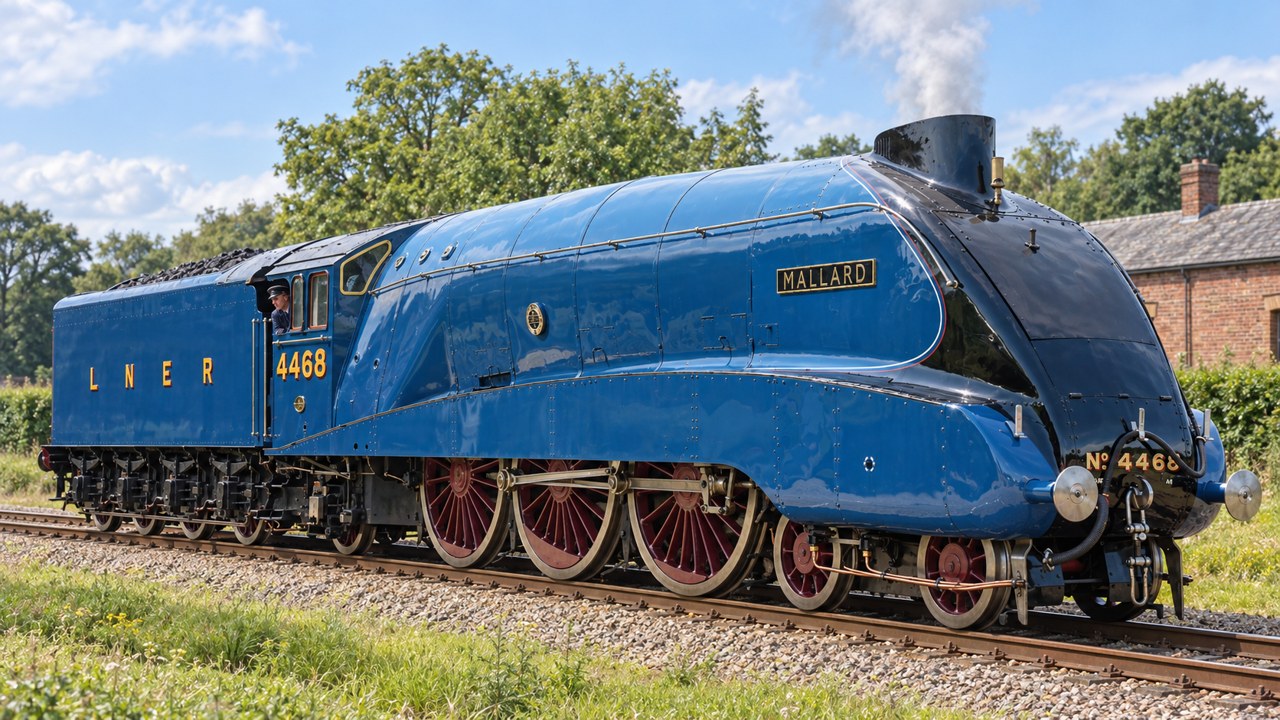
Mallard’s blue outline conceals much of the machinery associated with a steam locomotive. Streamlined casing directs air around the boiler and wheels, giving the engine a continuous shape. It belonged to the London and North Eastern Railway’s A4 class, developed under Nigel Gresley for express passenger work.
On 3 July 1938, Mallard reached 126 miles per hour, approximately 203 kilometres per hour, setting the world speed record for a steam locomotive. The figure represents the combined work of boiler, steam distribution, wheels, track and crew.
Air resistance rises rapidly with speed. Reducing it leaves more power available to move the train. Yet casing alone could not achieve the result: the fire had to supply enough heat, the boiler enough steam and the moving parts had to maintain their rhythm under enormous loads.
Mallard represents the maturity of steam engineering. As other forms of traction emerged, steam designers continued pursuing greater performance through increasingly refined machinery.
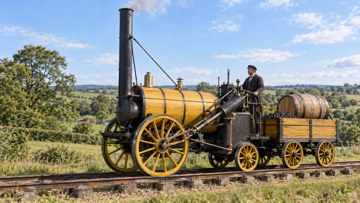
Preserved at the National Railway Museum, it carries No. 4468 and the blue appearance that made it recognisable. Its significance extends beyond the record. It shows how far the railway had travelled from its first boilers on wheels: the same source of energy had produced a machine capable of exceeding two hundred kilometres per hour.