Germany, 1991
ICE 1: Travelling Fast, Making the Journey Count
 ▶ Play timeline ▶ Watch on YouTube ↗
A telephone and a fax machine might sound like office equipment. On ICE 1, they also expressed an idea about travel: the time between cities could be spent working, talking or dining while the landscape passed outside. German high-speed rail aimed to offer more than an earlier arrival.
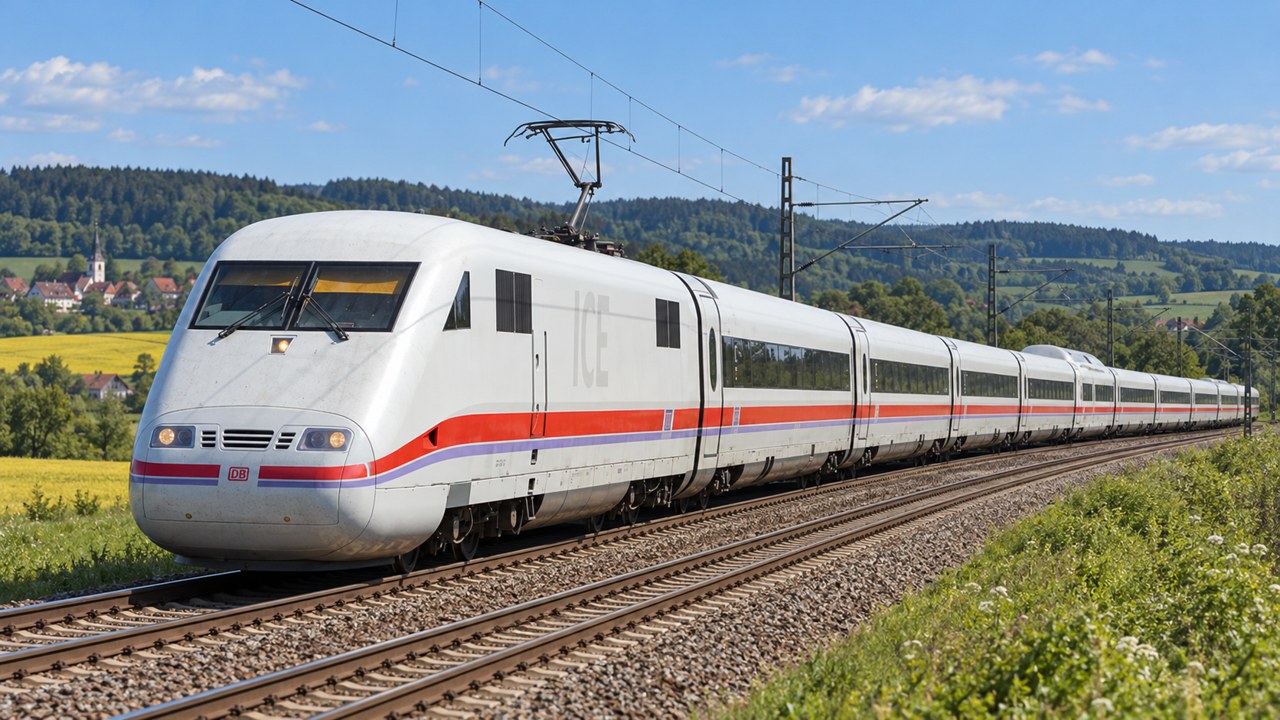
Regular ICE services began on 2 June 1991. The first route linked Hamburg and Munich. The name Intercity-Express extended an established tradition of travel between cities while announcing a new era, identified with white electric trains and streamlined noses.
The change drew on the Hannover-Würzburg and Mannheim-Stuttgart high-speed lines. Building a fast train was only part of the task: it also needed routes on which to use its capabilities. New sections connected with the existing network, making the innovation part of journeys between major cities.
ICE 1 retained a readily understandable layout: a power car at either end, with a long string of passenger coaches between them. It was designed for heavily used corridors. Driving cabs at both ends allowed the complete formation to operate in either direction.
Inside, comfort mattered. Sound insulation and a smooth ride helped create an environment removed from the activity beneath the floor. There was a restaurant, telephones and a conference compartment equipped with a fax machine. First-class entertainment also included screens. Seen today, those facilities capture a moment before the smartphone: the train itself had to provide much of the technology that enabled communication and access to information on the move.
ICE 1's history was also marked by the disaster at Eschede. On 3 June 1998, a broken wheel tyre triggered the derailment of a train from this family and the collapse of a bridge. One hundred and one people died. The event remains inseparable from the train's history and the memory of those on board.
Over the years, successive modernisation programmes changed interiors and equipment to meet new needs, while further ICE generations appeared. The original retained its place as the train that had brought this new travel experience into regular service.
Its appeal can be understood both from the platform and from a passenger's seat: speed that brought destinations closer, and a space in which to make use of the journey. Together, those qualities helped turn the letters ICE into a recognisable identity for German rail travel.